How to Improve Reaction Time
Can You Actually Train Your Reaction Time?
Yes, and that surprises a lot of people the first time they hear it. Reflexes, the kind where your leg kicks out when a doctor taps your knee, aren’t processed by the brain at all, so those genuinely can’t be trained. But reaction time is different. It’s the gap between noticing something and actually responding to it, and that entire loop, seeing, deciding, moving, gets faster with the right kind of practice.
Whether you’re trying to get better reaction time for gaming, looking to shave a few milliseconds off your sprint start, wondering how to improve reaction time as a goalkeeper, or simply want quicker reflexes as you get older, the underlying science is largely the same. Your nervous system is trainable, and small consistent habits add up to real, measurable improvement over just a few weeks.
Sleep Is the Single Biggest Factor
If you only change one thing, make it this. Studies have shown that getting less than seven hours of sleep can slow your reaction speed by an amount comparable to being legally intoxicated. That’s not a small effect. Even one rough night can add twenty to thirty milliseconds to your simple reaction time, which is a massive gap when you consider that the difference between an average gamer and a pro is often smaller than that.
Sleep is when your brain actually consolidates the neural pathways you built during practice. So if you’re wondering how to improve reaction time drastically without spending a dollar on equipment, fixing your sleep schedule first is genuinely the highest leverage move available to you.
Exercise and Blood Flow
Cardiovascular exercise increases blood flow to the brain, which supports the exact cognitive processes reaction time depends on. Research published in Frontiers in Aging Neuroscience found that regular aerobic activity meaningfully improved reaction times even in older adults, which is encouraging if you’re specifically looking into how to improve reaction time as you age or how to improve reaction time in older adults more generally.
You don’t need anything elaborate here. Running or jogging for twenty to thirty minutes, three to four times a week, cycling, swimming, or even short bursts of high intensity interval training all help. The goal isn’t building athletic performance from scratch, it’s simply keeping blood and oxygen moving efficiently to the parts of your brain doing the reacting.
Practice With Unpredictable Stimuli
Here’s the part that trips a lot of people up. Practicing a scripted, predictable movement barely improves your reaction speed at all. What actually works is responding to something you can’t anticipate, over and over, so your brain’s perception to response loop genuinely speeds up rather than just memorizing a pattern.
A few simple drills you can do at home or with a partner:
The ruler drop test. Have a partner hold a ruler vertically in front of you at chest height. Position your thumb and finger near the bottom without touching it, and catch it the instant they let go. The shorter the distance it falls before you catch it, the faster your reaction. This doubles as a great way to track your progress over time.
Ball drills. Stand in a ready position with your knees slightly bent. Have a partner hold two tennis balls out in front of you and drop one at random. Catch it before it hits the ground. This is a favorite among coaches figuring out how to improve reaction time for basketball, volleyball, or any sport where you’re reacting to a moving object.
Reaction ball catches. A reaction ball, the kind with odd angled sides, bounces unpredictably off a wall or the ground, forcing your hands and eyes to stay genuinely alert rather than falling into a rhythm.
Switching hands. Using your non-dominant hand for everyday tasks, like brushing your teeth, signing your name, or eating, forces your brain to build new neural pathways rather than relying on old automatic ones. It sounds too simple to matter, but it’s one of the easiest cognitive exercises to build into daily life if you’re figuring out how to improve reaction time alone, without any equipment or a training partner.
Light and cue drills. Reacting to a randomly triggered light instead of a person’s hand is even better, since a human partner can subconsciously telegraph their movements. If you don’t have access to reaction light equipment, even a simple online reaction time test that uses randomized colors serves the same purpose in a pinch.
Mental and Cognitive Training
Reaction time isn’t purely physical. A meaningful part of it comes down to how quickly your brain processes information and makes a decision, which is why cognitive exercises genuinely help.
Brain games, puzzles, and memory challenges build focus and processing speed. Meditation has actual research behind it too, a study in Consciousness and Cognition found that just ten minutes of daily meditation improved reaction times by sharpening focus and cutting down on mental clutter. If you’re wondering how to improve focus and reaction time together, this is one of the most efficient ways to work on both at once.
Watching film and studying patterns also plays a bigger role than most people expect, especially in competitive settings. When you can predict what’s likely to happen next, your apparent reaction time drops dramatically, since your brain is essentially narrowing down the possibilities before the stimulus even appears. This is exactly how elite athletes and top level esports players seem to react instantly, they’re not always faster in a raw biological sense, they’re often just better at anticipating.
Nutrition, Hydration, and Caffeine
What you put into your body plays a real supporting role in how fast your nervous system fires. A diet with enough B vitamins, omega-3 fatty acids, and iron supports healthy nerve conduction, and staying properly hydrated keeps your brain functioning at its best.
Caffeine can genuinely help too, in moderation. It boosts alertness and can shave measurable time off your reactions, but overdo it and the jitters and anxiety that come with too much caffeine will actually hurt your fine motor control instead of helping it. If you’re experimenting with how much caffeine to improve reaction time works best, start small and pay attention to how your own body responds rather than chasing a specific number.
On the flip side, recreational substances including cannabis, benzodiazepines, and opioids all measurably slow reaction time. If peak reaction speed genuinely matters to you, whether for competition or safety reasons like driving, cutting back on these is one of the most impactful changes available.
How to Improve Reaction Time for Gaming
Competitive gaming has turned this into a genuine skill people train deliberately, whether the goal is getting a faster reaction time in Valorant, CS2, Call of Duty, League of Legends, Rainbow Six Siege, or basically any fast paced title.
A few gaming specific angles worth focusing on:
- Train with aim trainers and sequence memory drills, not just the game itself. These isolate the reaction and decision making element without the noise of an actual match.
- Optimize your hardware. A higher refresh rate monitor, a mouse with a high polling rate, and low input lag peripherals won’t make you biologically faster, but they’ll stop your setup from adding unnecessary milliseconds on top of your real reflexes.
- Combine visual and audio training. Since your ears process sound faster than your eyes process light, players who train themselves to react to footsteps and audio cues, not just what’s on screen, often get a meaningful edge.
- Play regularly and deliberately, not just casually. Studies on action game players consistently show gaps of ten to twenty percent in reaction speed compared to non gamers, and while equipment explains some of that, genuine visual processing improvement explains a lot of it too.
Sport Specific Tips
Different sports demand slightly different flavors of quick reaction, so here’s how it breaks down across a few common ones.
Sprinting and track. Reacting to the starting gun is almost entirely about a trained, automatic response rather than conscious decision making, since anything under 100 milliseconds is actually flagged as a false start. Sprinters train this specific explosive reaction constantly, often using starting block drills paired with randomized cues.
Boxing and martial arts. Whether you’re working on reaction time for boxing, muay thai, or general martial arts, shadow drills against an unpredictable partner and reaction ball work against a wall both build the split second responses fighters rely on to slip a punch or counter an opening.
Tennis, badminton, table tennis, padel, and squash. These racquet sports demand fast lateral movement paired with hand eye coordination, so drills using a reaction ball or a partner feeding unpredictable shots work particularly well here.
Baseball, softball, and cricket. Batters improve their reaction to a pitch largely through repetition against varied pitch speeds and angles, building the pattern recognition that lets them start their swing before consciously registering every detail of the ball’s path.
Basketball, volleyball, soccer, and netball. These team sports benefit heavily from ball drills and light or cue based reaction training, since players constantly need to react to teammates, opponents, and a moving ball at the same time.
Goalkeepers, whether in soccer, hockey, or lacrosse, rely on a mix of visual reaction and the ability to read a shooter’s posture early. Training often combines reaction ball catches with film study of common shooting patterns.
Drag racing. Reacting to the tree, the staged lighting system used to start a race, is one of the purest tests of raw reaction speed in any sport, and racers often train specifically using replica light trees to shave hundredths of a second off their launch.
Swimming. Reacting to the starting signal works much like sprinting, and swimmers train it the same way, with repeated, randomized starts rather than predictable countdowns.
How to Improve Reaction Time While Driving
Driving reaction time is a little different from a simple click test, since it includes an extra step called perception time, the moment it takes to actually recognize a hazard before your brain even starts planning to brake. A few practical habits help here specifically.
Avoiding distractions is the obvious one, since anything pulling your attention off the road adds directly onto your total reaction distance. Getting enough sleep before a long drive matters just as much as it does for gaming or sports. And simply practicing defensive driving, actively scanning for hazards rather than passively watching the road, trains your brain to notice potential dangers earlier, which effectively buys you extra reaction time before you even need to touch the brake.
Improving Reaction Time in Kids and Older Adults
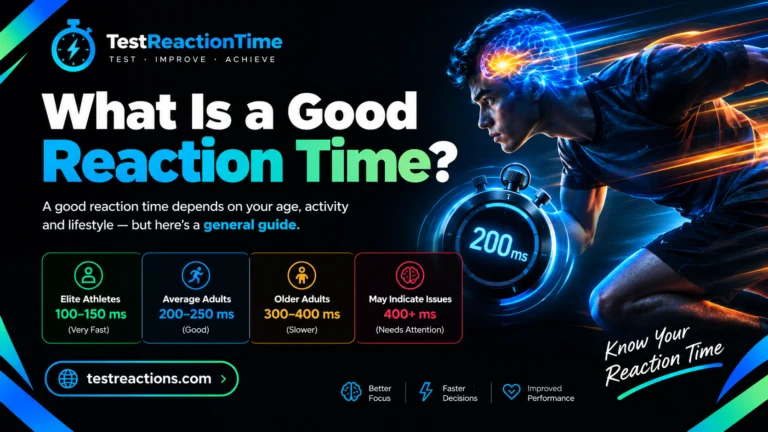
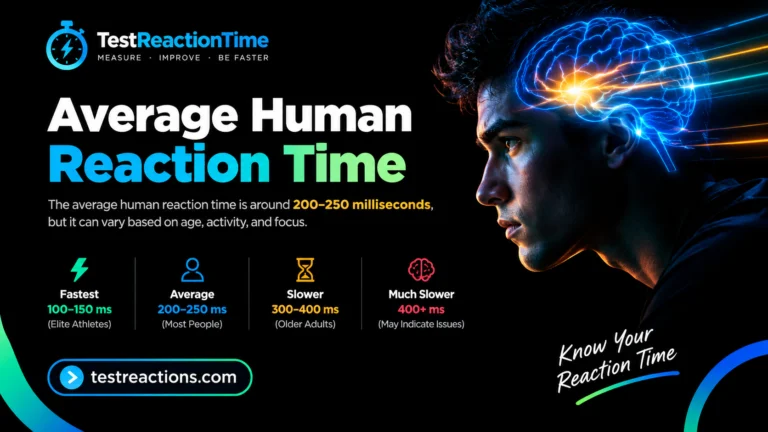
Reaction speed naturally follows a curve across a lifetime, improving through childhood, peaking in the twenties, and gradually slowing from the forties onward. That doesn’t mean training is pointless outside that peak window though.
For kids, simple, playful versions of the drills above, like catching a dropped ball or playing reaction based games, build the same neural pathways while keeping things fun rather than feeling like training. For older adults, the research is genuinely encouraging. Regular aerobic exercise, staying cognitively engaged, and the same light or ball based drills used by younger athletes have all been shown to meaningfully slow or even reverse some of the natural decline, so it’s never really too late to start.
Putting It All Together
If you’re looking for a simple starting plan rather than trying to do everything at once, here’s a realistic approach. Spend the first week just establishing your baseline, testing yourself in the morning and tracking your average, while cleaning up your sleep and hydration. In the second week, add in five minutes of ball or light based drills, five times a week. From there, layer in whichever sport or gaming specific training applies to you, along with a bit of cognitive work like meditation or brain games.
Most people notice measurable improvement within two to three weeks of consistent practice, and just like physical fitness, the gains fade if you stop training entirely, so the goal is building a light, sustainable habit rather than a short burst of effort.
Frequently Asked Questions
Can you actually improve your reaction time, or is it fixed?
You can genuinely improve it. While reflexes are hardwired and can’t be trained, reaction time involves perception, decision making, and motor response, all of which get faster with consistent, deliberate practice.
How long does it take to improve reaction time?
Many people notice measurable improvement within one to two weeks of consistent daily practice, though continued gains typically build over several weeks to months.
Does sleep really affect reaction time that much?
Yes. Getting less than seven hours of sleep can slow reaction time by an amount comparable to legal intoxication, making it one of the most impactful factors you can control.
What’s the fastest way to improve reaction time for gaming?
A combination of dedicated aim training, optimized hardware with low input lag, and regular practice against unpredictable in game situations tends to produce the fastest measurable gains.
Can older adults improve their reaction time?
Yes. Regular aerobic exercise and consistent reaction based drills have been shown to meaningfully improve reaction speed even in older age groups, according to published research.
Does caffeine help reaction time?
In moderate amounts, yes, since it boosts alertness. Too much, however, can cause jitters that actually hurt fine motor control and offset the benefit.
Is reaction time training the same for every sport?
The core principle, reacting to unpredictable stimuli, stays the same, but the specific drills often differ depending on whether you’re training visual tracking, auditory response, or full body movement.
Final Words
Take a reaction time test today, note your baseline, and revisit it in a couple of weeks. Watching your own numbers improve is often the best motivation to stick with the habit.
3 Comments