
Is My Reaction Time Good?
You just finished a reaction time test, a number popped up in milliseconds, and now you’re staring at it wondering what it actually means. Is 190ms fast? Is 250ms something to worry about? You’re not alone in asking this, it’s one of the most common questions people search right after taking the test, and the honest answer depends on a few things worth understanding before you judge your own score.

The Quick Read
On a standard visual browser test, where you click the moment a screen changes color, here’s roughly how most individual scores break down for adults.
| Your Score | What It Usually Means |
|---|---|
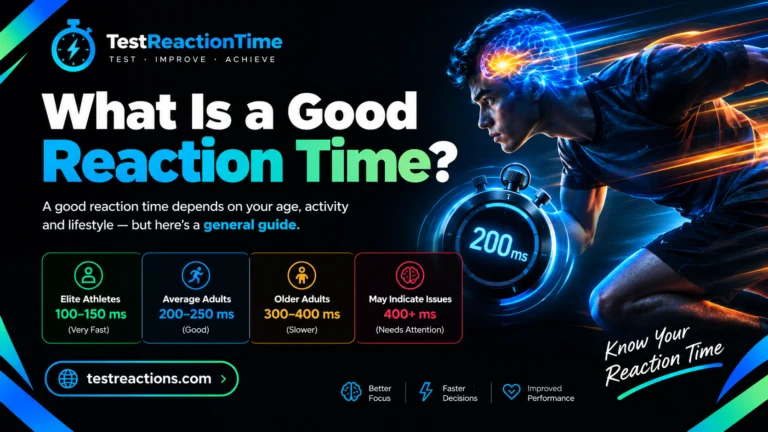
| Around 150 to 170 ms | Fast, and worth double checking with a few more attempts |
| Around 180 to 200 ms | Above average, a genuinely solid result |
| Around 210 to 230 ms | Good, sits comfortably in the better half of typical scores |
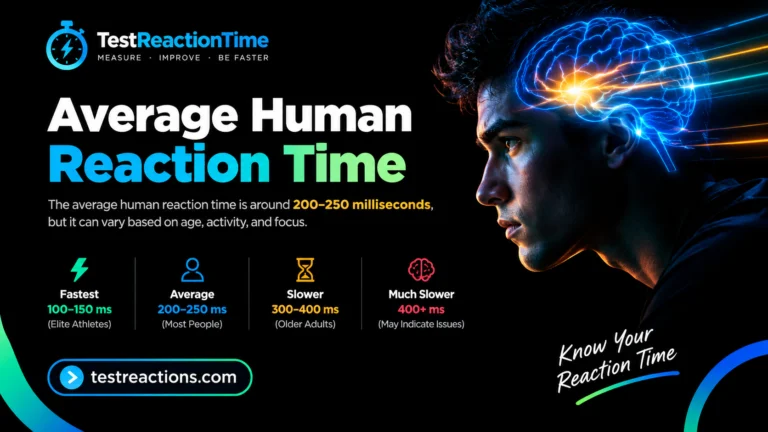
| Around 240 to 260 ms | Average, right around where most adults land |
| Around 270 to 300 ms | Below average, but not unusual, especially on mobile |
| Above 320 ms | Slower than typical, worth checking fatigue and device setup |
Keep in mind these bands overlap on purpose. A 225ms result and a 235ms result aren’t meaningfully different scores, they’re both sitting in the same general “good” territory, and treating a ten millisecond gap like a real skill difference misunderstands how this kind of test actually works.
Is 170ms a Good Reaction Time?
Yes, generally. A result near 170 milliseconds is fast for a simple visual test, sitting comfortably above where most adults land. It’s not so fast that it should raise suspicion on its own, but it is quick enough that it’s worth confirming with a few repeat attempts before you fully trust it as your real baseline.
If most of your clicks cluster somewhere around 165 to 185 milliseconds, that’s a genuinely strong, consistent result. If you got one lucky 170ms click surrounded by several attempts closer to 220 or 230, the honest number to trust is the cluster, not the single outlier.
Is 190ms a Good Reaction Time?
Yes, 190 milliseconds is typically above average on a browser based visual test. It’s fast enough to stand out from a typical adult result without requiring elite level hardware or years of competitive training to achieve.
It’s worth remembering that a good visual score and a good score on a different type of test aren’t directly comparable. Auditory tests, where you react to a sound instead of a color, tend to run faster across the board, so a 190ms result on a visual test is actually a stronger relative performance than the same 190ms would be on an auditory one.
Is 200ms a Good Reaction Time?
Yes, 200 milliseconds is a solidly good result, often noticeably faster than the typical adult average, which tends to sit closer to the mid 200s. Where exactly it lands on the “good” scale still depends a bit on your age and your device, since the same 200ms score reads as more impressive for someone in their fifties than it does for someone in peak reaction years during their early twenties.
Setup matters here too. Plenty of people see something close to 200ms on a responsive desktop with a wired mouse and a higher refresh rate monitor, then watch that same number climb to 230 or even 260 milliseconds when they retake the exact same test on a phone. Before comparing your score against anyone else’s, it’s worth checking whether you’re even comparing similar devices.
Is 220ms a Good Reaction Time?
Yes, 220 milliseconds generally sits in solid, respectable territory, leaning toward the faster half of everyday results. It’s a completely reasonable score to treat as a personal training baseline rather than something to be disappointed by.
Small differences in this range rarely mean much from a single test session. The gap between 210ms and 230ms, for example, is well within the natural noise of clicking a mouse or tapping a screen, so it’s far more useful to track whether your weekly average trends downward over time than to chase a one millisecond personal best on any single attempt.
Is 250ms a Good Reaction Time?
Yes, in the sense that it’s right around a typical adult average on most casual online tests. It’s neither an unusually slow result nor a standout fast one, it’s simply common.
Context still shapes how to read it. For some age groups, especially anyone under 20 or over 50, 250ms can actually be a fairly quick result. For someone testing on a well tuned desktop setup in their competitive twenties, it might land closer to the middle of the pack instead. Either way, 250ms is a completely normal number to build from, not a score that suggests anything is wrong.
When Is a Score Unusually Fast?
Repeated results consistently under about 180 milliseconds are uncommon for the general population on a casual browser test, and they usually reflect a mix of genuine practice, sharp focus, and a low latency setup rather than anything extraordinary. If your clean, repeated attempts keep landing somewhere around 150 to 170 milliseconds, that’s a genuinely fast result worth being proud of.
That said, it’s worth staying a little skeptical of any single click that lands dramatically faster than the rest of your attempts. Anticipating the color change slightly early, an accidental double click, or the occasional quirky timing glitch in a browser can all produce a one off reading that doesn’t reflect your real, repeatable speed. If one attempt comes in far ahead of the rest, the honest move is to throw it out and retest rather than proudly reporting your single best click as your true score.
How to Actually Judge Your Own Score
The most reliable way to answer “is my reaction time good isn’t to fixate on one number, it’s to look at a small cluster of attempts taken under consistent conditions.
Run the test three to five times in a row and take the average, since a single click can easily be thrown off by a slow start, a moment of distraction, or pure timing luck in either direction. Stick with the same device each time you compare sessions, since switching from a desktop mouse to a touchscreen phone can shift your numbers by twenty or thirty milliseconds without your actual reflexes changing at all. Test at a similar time of day where possible, since fatigue late at night genuinely slows real reaction speed compared to a fresh attempt in the morning. And treat the whole exercise as a personal baseline to track over weeks rather than a one time pass or fail grade, since the real value here is watching your own trend improve, not matching a specific number you read somewhere online.
Frequently Asked Questions
Is 170ms reaction time good?
Yes, it’s a fast result for a visual browser test, though it’s worth confirming with a few repeat attempts.
Is 190ms reaction time good?
Yes, it’s typically above average for most adults on a standard visual test.
Is 200ms a good reaction time?
Yes, it’s a strong, solidly good score for the average adult.
Is 220ms a good reaction time?
Yes, it sits comfortably in respectable, above average territory for most people.
Is 250ms a good reaction time?
Yes, it’s close to a typical adult average, neither slow nor unusually fast.
Can a reaction time score be too fast to trust?
Sometimes. Results far under 150ms on a casual test can reflect anticipation or a timing glitch rather than a genuine reaction.
Should I trust my single best score or my average?
Your average. A cluster of consistent attempts is far more reliable than one standout click in either direction.
Does my age change what counts as a good score?
Yes, the same millisecond result can be impressive for an older adult while being closer to average for someone in their twenties.
Final Words
Whatever number you’re staring at right now, chances are it’s telling you something completely normal about how your brain and body are working together. A good reaction time isn’t a single magic threshold you either clear or miss, it’s a range that shifts with your age, your device, and even the time of day you happened to test. Run it a few more times, take the average, and use that as your real answer instead of judging yourself off one click.




One Comment